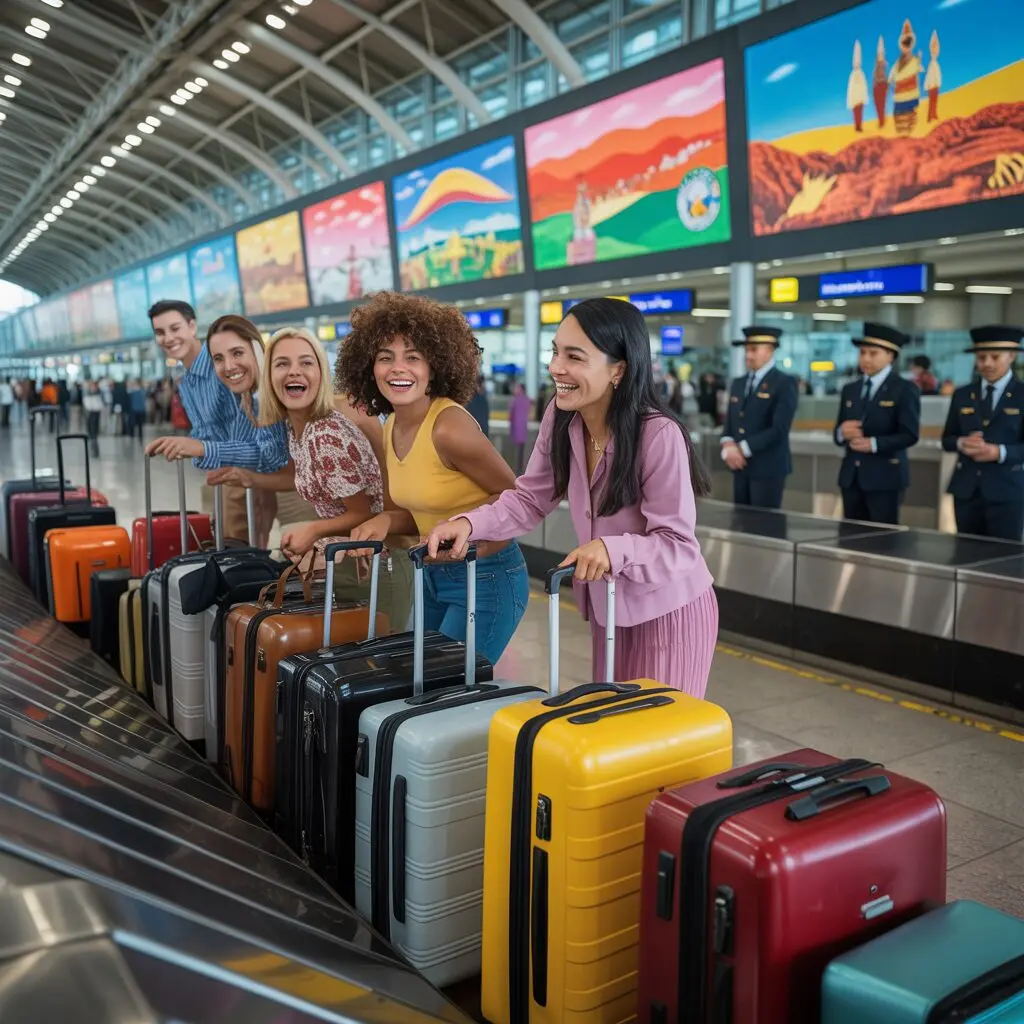
Colombia is a country of incredible diversity – from Caribbean beaches to Andean peaks, colonial cities to modern metropolises. If you are planning your first trip, this guide covers everything you need to know about the arrival process, customs rules, health tips, and practical advice to make your visit smooth and enjoyable.
Arrival at Colombian Airports
Most international flights arrive at one of Colombia’s four main airports:
| Airport | Code | City | Best For |
|---|---|---|---|
| El Dorado International | BOG | Bogota | Capital, business, most connections |
| Jose Maria Cordova | MDE | Medellin | Coffee region, city of eternal spring |
| Rafael Nunez | CTG | Cartagena | Caribbean coast, beaches, old city |
| Alfonso Bonilla Aragon | CLO | Cali | Salsa capital, Pacific access |
El Dorado in Bogota is the largest and busiest. If you are flying from North America or Europe, Bogota is the most common arrival point, with onward domestic flights to other cities.
Arrival sequence:
- Deplane and follow signs to immigration (Migracion)
- Join the foreign passport line (not the Colombian citizen line)
- Present your passport and Check-MIG QR code
- Receive your entry stamp
- Collect checked baggage at the carousel
- Proceed through customs (green channel = nothing to declare)
- Exit to the arrivals hall
For information about Check-MIG preparation before your flight, see our complete Check-MIG guide.
Immigration Process
The immigration process at Colombian airports is efficient and usually takes 10 to 30 minutes, depending on the queue.
What the officer will ask:
- How long do you plan to stay?
- What is the purpose of your visit?
- Where are you staying?
What you need to present:
- Valid passport with at least 6 months remaining validity
- Check-MIG QR code (digital or printed)
- Return or onward flight booking (sometimes requested)
The officer stamps your passport with the authorized number of days (up to 90 for most nationalities). Check the stamp before you leave the counter – verify the number of days and the date are correct.
Lines and wait times:
- Bogota: Can be 20-40 minutes during peak arrival hours (Friday evening, Sunday afternoon)
- Cartagena: Typically 10-20 minutes
- Medellin: Typically 15-25 minutes
Customs Rules
After collecting your luggage, you pass through customs. Colombia uses a channel system:
Green channel (nothing to declare):
- Personal items within duty-free limits
- No prohibited goods
- No large amounts of cash
Red channel (items to declare):
- Goods exceeding duty-free limits
- Cash over $10,000 USD equivalent
- Items for commercial purposes
Duty-free limits:
- Up to 200 cigarettes or 50 cigars
- Up to 2 liters of alcohol
- Gifts up to $1,500 USD value
- Personal electronics (laptop, phone, camera) for personal use
Prohibited items:
- Drugs and narcotics (severe penalties)
- Weapons and ammunition (without permits)
- Certain agricultural products
- Endangered species products
- Counterfeit goods
Customs tip: Declare items proactively if you are over the limits. Colombian customs officers are generally professional and reasonable. Undeclared items that are discovered result in fines or confiscation.
Health and Safety Tips
Vaccinations:
- Yellow fever: Required if visiting certain regions (Amazon, Pacific lowlands). Not required for Bogota, Medellin, Cartagena, or most tourist areas.
- Hepatitis A and B: Recommended for all travelers
- Typhoid: Recommended if visiting rural areas
- Routine vaccines: Ensure measles, tetanus, and polio are up to date
Altitude: Bogota sits at 2,640 meters (8,660 feet) above sea level. If you are arriving from sea level, you may experience mild altitude effects – headache, shortness of breath, fatigue. These typically resolve within 24-48 hours. Drink plenty of water and avoid heavy exercise on your first day.
Water: Tap water is safe to drink in Bogota and most major cities. In smaller towns and coastal areas, bottled water is recommended.
Food safety: Colombian street food is a highlight of any visit. Use common sense – choose busy stalls with high turnover (fresh food) and avoid items that have been sitting at room temperature for extended periods.
Sun protection: Colombia is near the equator. UV radiation is strong, especially at altitude and on the coast. High-SPF sunscreen, a hat, and sunglasses are essential.
Currency and Money
Colombia uses the Colombian Peso (COP). As of 2025, the exchange rate is approximately 4,000-4,200 COP to 1 USD (rates fluctuate).
Getting cash:
- ATMs are widely available in cities and towns
- Withdraw from bank-attached ATMs (Bancolombia, Davivienda, Banco de Bogota) for safety
- ATM withdrawal limits are typically 300,000-800,000 COP per transaction
- Some ATMs have English-language interfaces
Credit cards:
- Visa and Mastercard accepted in most restaurants, hotels, and shops in cities
- American Express is less commonly accepted
- Small vendors, markets, and rural areas are cash-only
Exchange tips:
- Airport exchange counters have poor rates – exchange a small amount if needed and get the rest from ATMs in the city
- Do not exchange money with street money changers
- Keep small bills (10,000 and 20,000 COP notes) for taxis, tips, and small purchases
Best Time to Visit
Colombia is a year-round destination because its climate varies by region and altitude rather than by season.
| Region | Best Months | Climate |
|---|---|---|
| Bogota | December – March, July – August | Cool, 10-20C (50-68F), rainy season April-June |
| Medellin | Year-round | Spring-like, 18-28C (64-82F) |
| Cartagena | December – April | Hot and humid, 25-35C (77-95F) |
| Coffee Region | December – March | Mild, 15-25C (59-77F) |
| Amazon | July – September | Drier season, more accessible |
Peak travel periods:
- December 15 – January 15 (Christmas and New Year holidays)
- Easter week (Semana Santa) – major holiday
- June – July (summer for North American and European travelers)
- Long weekends (Colombia has many national holidays)
Shoulder season sweet spot: October – November and February – March offer good weather, fewer crowds, and better prices for accommodation.
Getting from Airport to City
Bogota (El Dorado):
- Taxi: Official yellow taxis from the taxi stand outside arrivals. Fixed fare to most city areas: 25,000-40,000 COP. Use the official taxi stand, not drivers who approach you.
- Ride-sharing: Uber, InDriver, and Didi operate in Bogota. Pick-up is in the designated area outside arrivals.
- TransMilenio bus: The airport connects to the TransMilenio rapid bus system. Cheapest option but not recommended with heavy luggage.
- Hotel shuttle: Many hotels offer airport pickup. Confirm in advance.
Medellin (Jose Maria Cordova):
- The airport is 45 minutes from the city. Shared shuttle buses run regularly (~15,000 COP). Taxis are approximately 80,000-100,000 COP.
Cartagena (Rafael Nunez):
- Close to the old city (15 minutes). Taxis cost approximately 15,000-20,000 COP. Ride-sharing apps also work.
Travel Tips for First-Time Visitors
Safety: Colombia’s major tourist areas are well-patrolled and generally safe. Standard precautions apply – do not display expensive jewelry or electronics conspicuously, use registered taxis or ride apps, and stay aware of your surroundings, especially at night.
Language: Spanish is the primary language. English is spoken in tourist hotels and upscale restaurants in major cities. Learning basic Spanish phrases (hello, thank you, how much, where is) enriches your experience significantly.
Tipping: Not mandatory but appreciated. Restaurants sometimes add a 10% propina (tip) – check your bill. If service charge is included, additional tipping is optional. For excellent service, 10-15% is standard.
Connectivity: Colombia has excellent mobile coverage in cities. Tourist SIM cards are available at the airport and in convenience stores (Claro, Movistar, Tigo are the main carriers). A prepaid SIM with data costs approximately 20,000-50,000 COP.
Plugs: Colombia uses Type A and Type B plugs (same as the US and Canada), with 110V/60Hz. US travelers do not need adapters.
Domestic flights: Colombia has affordable domestic flights connecting major cities. Airlines like Avianca, LATAM, Viva Air, and Wingo offer frequent service. Book in advance for the best prices.
Frequently Asked Questions
Colombia is a rewarding destination that is more accessible than many travelers expect. With your Check-MIG QR code in hand, some cash, and a sense of adventure, you are ready to explore one of South America’s most vibrant countries. For the essential first step, fill out your Check-MIG before departure.